

Why Sound Clean Energy Projects Keep Losing
It isn’t only the technology, supply chains, or economics. Too often, the deciding factor is local trust—and it’s time to improve the playbook.

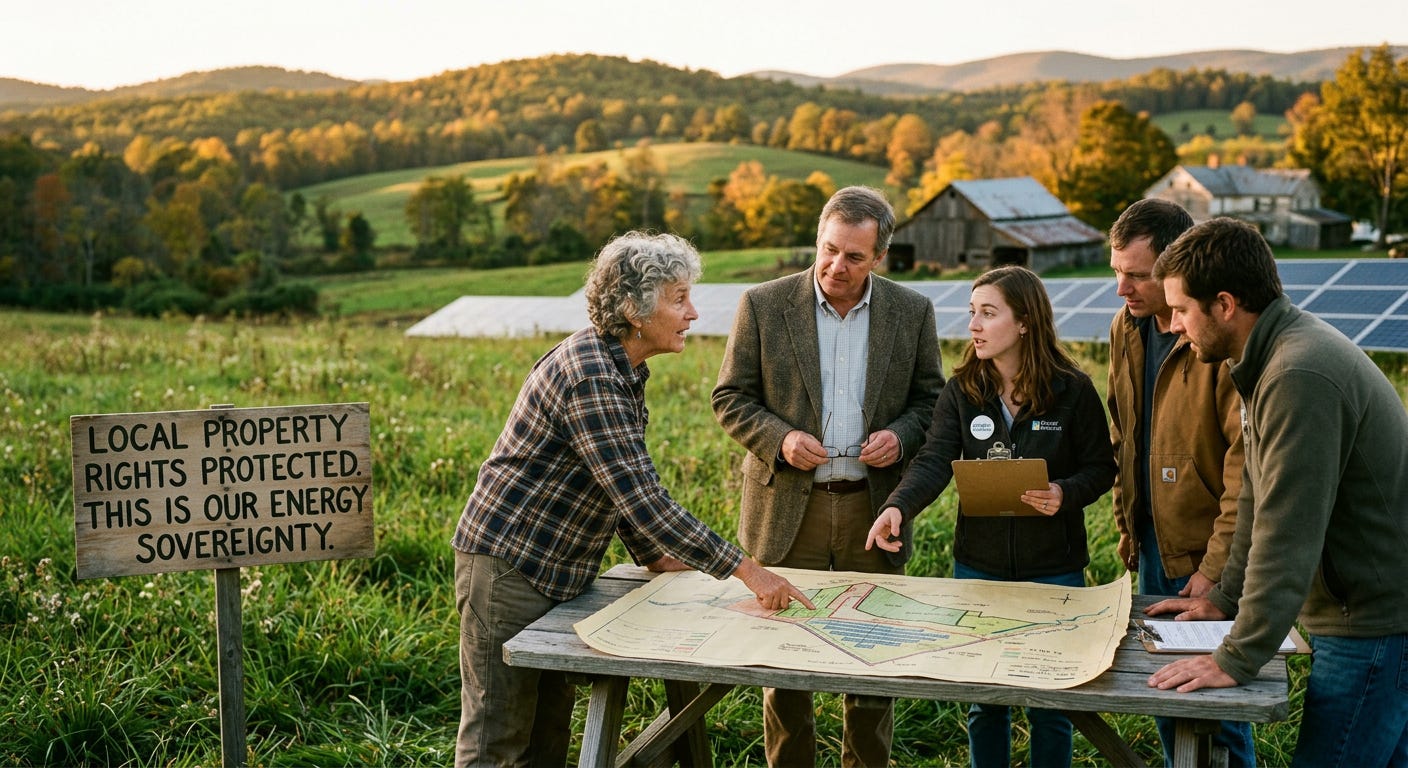
Every month across the country, viable, well-capitalized clean energy and rural infrastructure projects quietly stall or disappear.
They do not always fail because the engineering is flawed or the financial models fall apart. They are not always canceled because landowners oppose solar lease payments or because clean energy is unnecessary on the grid.
Many fail because of a predictable and avoidable sequence of events: local communication breaks down, trust erodes, and the project story is shaped by others before the facts are fully heard.
The Interconnection Graveyard
If you look at the available industry research, a consistent pattern emerges:
· The Queue Bottleneck: Interconnection queues remain a major filter for proposed generation projects. Lawrence Berkeley National Laboratory’s Queued Up research reports that most projects applying for interconnection are ultimately withdrawn, and that the projects reaching commercial operation are taking longer to move through the process.
· Local Restrictions Are Growing: The Sabin Center for Climate Change Law at Columbia Law School reports that, by the end of 2024, at least 459 counties and municipalities across 44 states had adopted severe local restrictions on renewable energy siting. USA Today has also reported increased use of bans, moratoria, setbacks, and other local restrictions affecting utility-scale wind and solar development.
· Early-Stage Project Risk: A Berkeley Lab survey of utility-scale wind and solar developers found that local ordinances or zoning, grid interconnection, and community opposition are among the leading causes of project cancellations and significant delays.
Taken together, the research points to a practical conclusion: local engagement is no longer a side issue. It is a core project risk that needs to be managed early, honestly, and locally.
The Outdated Corporate Playbook
When concerns surface in a rural township or suburbanizing county, the standard response often looks like this:
· The Passive Phase: Keep the project quiet as long as possible to protect site control.
· The Late Open House: Arrive months into the process with polished display boards, outside consultants, and broad talking points about regional energy needs.
· The High-Stakes Public Hearing: Enter a county board or planning commission meeting expecting a technical presentation to resolve concerns that have already become emotional, local, and personal.
This approach can unintentionally make landowners and residents feel managed rather than respected. It also gives local concerns time to harden before developers, advocates, or participating landowners have made a clear case grounded in the community’s own priorities.
When communication feels distant, people assume there is something to hide. When the message relies on general corporate language, it can miss the specific concerns that matter most to the community.
In short: good projects are losing local trust before they have a chance to earn it.
A New Approach: Local Sovereignty and Property Rights
Earning local trust requires moving beyond the default corporate communications template and grounding engagement in values that resonate on the ground:
· Property Rights: A landowner’s fundamental freedom to lease or use their land as they see fit without government overreach.
· Local Sovereignty: Respecting the character, heritage, and economic realities of the surrounding community.
· Honest Engagement: Showing up early, speaking plainly, and addressing legitimate local concerns—about setbacks, viewsheds, decommissioning, and community impacts—before misinformation fills the void.
This is not just a communications preference. Research from NREL and Oak Ridge National Laboratory emphasizes that renewable energy engagement is most effective when it accounts for community concerns, equity, participation, and local decision-making dynamics.
When clean energy is framed through the lens of individual liberty, local economic stability, and property rights, the conversation can change in a meaningful way.
What Politely Losing Is About
This publication is built on a simple premise: local communities deserve honest engagement, landowners deserve respect, and energy independence requires earning trust on the ground.
Through regional case studies anchored in the Greater Richmond area and the broader Mid-Atlantic corridor, we will examine the recurring friction points that shape local development debates. We’ll share:
· Field-Tested Playbooks: Practical frameworks for land advocates, developers, and local stakeholders.
· Regional Case Studies: On-the-ground analysis of county hearings, zoning disputes, and shifts in local opinion.
· Tactical Analysis: How to identify emerging concerns early and respond with truth, transparency, and local value.
Join the Journey
If you believe sound projects deserve a fair hearing—and that local communities deserve more than polished talking points after the fact—you’re in the right place.
Subscribe to follow the field reports, study the playbooks, and join a practical conversation about how local energy engagement can start earlier, speak more plainly, and earn more trust.
Sources
· Lawrence Berkeley National Laboratory, Survey of Utility-Scale Wind and Solar Developers Report.