

Same Battery, Different Reception: What Host Readiness Teaches Clean Energy Developers
How clean-energy projects win—or lose—local permission before anyone votes.

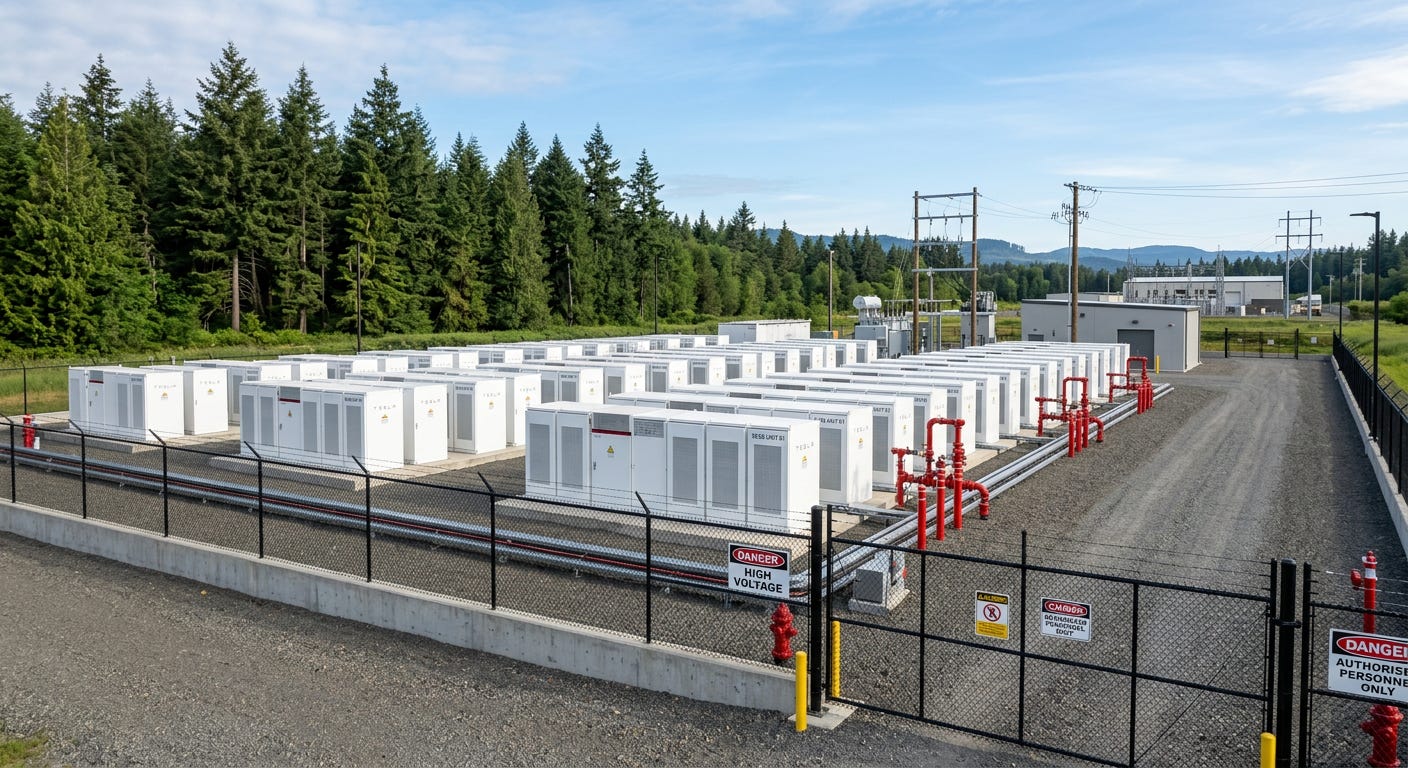
Battery storage is having a trust problem.
Not a technology problem, exactly. Not a climate problem. Not even, in many cases, a permitting problem. The deeper issue is that communities are being asked to accept large, unfamiliar energy infrastructure before they have had time to understand it, regulate it, or believe that the benefits will show up locally.
If you have ever sat through a local permitting hearing, you know the moment when the room changes. The technical presentation is still on the screen. The consultant is still explaining megawatts, setbacks, and emergency plans. But the public is no longer reacting to the slide deck. They are reacting to a feeling: Why are we only hearing about this now?
Look at Washington state right now. In parts of King County, utility-scale battery energy storage systems are running into local moratoria and prohibitions, driven in large part by fire-safety concerns sharpened by the January 2025 Moss Landing battery fire in California. The U.S. Environmental Protection Agency has described that incident as a major cleanup and safety-response effort involving damaged lithium-ion batteries, air monitoring, emergency planning, and ongoing public communication.
And yet, just north in Arlington, Snohomish County PUD is preparing to bring a 25-megawatt battery system online on its clean-energy campus. Local coverage describes the project as designed to discharge during peak demand, reduce exposure to high-cost power purchases, and support reliability as Washington adds more clean electricity.
Same core technology. Same state. Very different reception.
That contrast matters because it points to a lesson clean-energy developers too often learn late: community acceptance is not a mood. It is an outcome. More specifically, it is the product of host readiness, site selection, trust, and local relevance.
The Arlington Playbook
Snohomish County PUD did not appear to win local permission by asking residents to become battery experts overnight. The project entered the public conversation with several structural advantages already in place.
First, the site already had an infrastructure identity. The system is located on the PUD’s clean-energy campus, not dropped onto a quiet rural parcel or inserted next to a residential subdivision. That matters. People read land socially before they read it technically. A battery on a utility campus feels like an extension of an existing public purpose. A battery on unfamiliar land can feel like an intrusion.
Second, the host community had a permitting framework. Arlington had policy in place to support the review process. That does not guarantee approval, but it changes the emotional temperature. When local rules exist before an application arrives, the project can be evaluated. When no rules exist, the project itself becomes the emergency.
Third, safety was treated as central rather than incidental. Public reporting on the Arlington project emphasized fire detection, suppression, and safety systems. This is the right instinct. Communities are not reassured when developers minimize risk. They are reassured when risk is named, bounded, designed for, and connected to emergency-response planning.
Fourth, the local value proposition was concrete. This was not just an abstract contribution to the energy transition. The battery is intended to help the utility manage peak demand and reduce the need to buy expensive power during high-cost periods. That is a local benefit people can understand: reliability, affordability, and protection from price spikes.
Finally, the host had a trust profile. A public utility building infrastructure for its own customers begins from a different place than a private developer proposing a merchant project on land residents do not associate with energy infrastructure. This does not mean public projects are automatically trusted or private projects are doomed. But it does mean trust has to be treated as part of the development package, not as a communications problem to solve after opposition forms.
Rules Before Applicants
The same dynamic is showing up far beyond Washington. In Newcomb, New York, local officials adopted a 12-month moratorium on commercial and industrial battery storage permits even though no specific project had been submitted. Their stated goal was to study the technology, consult experts, involve fire officials, and build a local process before a proposal forced the issue.
That is not simply NIMBYism. It is institutional unreadiness. When a town lacks standards for setbacks, fire protection, noise, stormwater, decommissioning, and emergency response, a BESS application asks local officials to make a high-consequence decision without a map.
Harbor Beach, Michigan, offers the more constructive path. Its new zoning rules for utility-scale battery facilities address site plans, decommissioning, land restoration, fire protection, stormwater management, lighting, noise, and setbacks from residential districts, roads, neighboring properties, and sensitive environmental features. In other words, it translated fear into standards.
That is what host readiness looks like. It does not mean saying yes to every project. It means having enough civic capacity to ask better questions than “Can we stop this?” It means giving residents, developers, utilities, and first responders a shared framework before the public meeting becomes the battlefield.
A Host Readiness Checklist
· Infrastructure fit: Does the site already read as energy, utility, industrial, or civic infrastructure?
· Clear rules: Are zoning, setbacks, fire protection, stormwater, noise, lighting, decommissioning, and land-restoration standards already in place?
· Emergency readiness: Have fire officials and first responders reviewed the technology, access routes, water needs, monitoring systems, and response plan?
· Local benefit: Can residents understand how the project supports reliability, affordability, resilience, tax base, or community priorities?
· Trust profile: Is the applicant known, accountable, and willing to engage before opposition hardens?
The Bottom Line
Local consent cannot be won by explaining a bad site decision more elegantly.
If clean-energy developers want to deploy storage without triggering emergency moratoria, they need to choose the social setting of a project as carefully as the electrical interconnection point. The question is not only, “Can this site connect to the grid?” It is also, “Can this host community understand, regulate, benefit from, and trust what is being proposed?”
Projects that answer that question early stand a chance. Projects that ignore it may discover that the real bottleneck was never the battery.
This is where the next post in this series will go: if host readiness is the missing middle between technology and trust, then the next question is how developers, utilities, and local governments can build it before a project is already on the defensive.
Summary
Battery storage projects are not accepted or rejected on technical merits alone. Arlington’s smoother path shows the value of siting storage on land with an existing infrastructure identity, operating under clear local rules, foregrounding fire safety, connecting the project to tangible local benefits, and building from a position of trust. Communities without those ingredients are more likely to reach for moratoria, not because they oppose clean energy in principle, but because they lack the civic framework to evaluate it with confidence.
Call to Action
If you are a clean-energy developer, planner, utility leader, or local official, do not wait for the next application to force the conversation. Build the battery-storage playbook now: update ordinances, involve fire officials early, define setbacks and safety expectations, require decommissioning plans, and make local benefits specific enough for residents to see themselves in the project.
Clean energy does not just need better technology. It needs better hosts.
Source Notes