
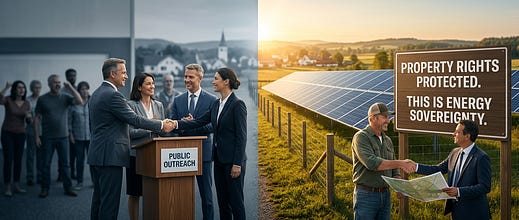
Put It in Writing: The New Rule for Renewable Energy Host Agreements
Discretionary donations and vague “community benefit” pledges are losing credibility. Rural communities are making clear that true social license now means a binding, auditable agreement signed before

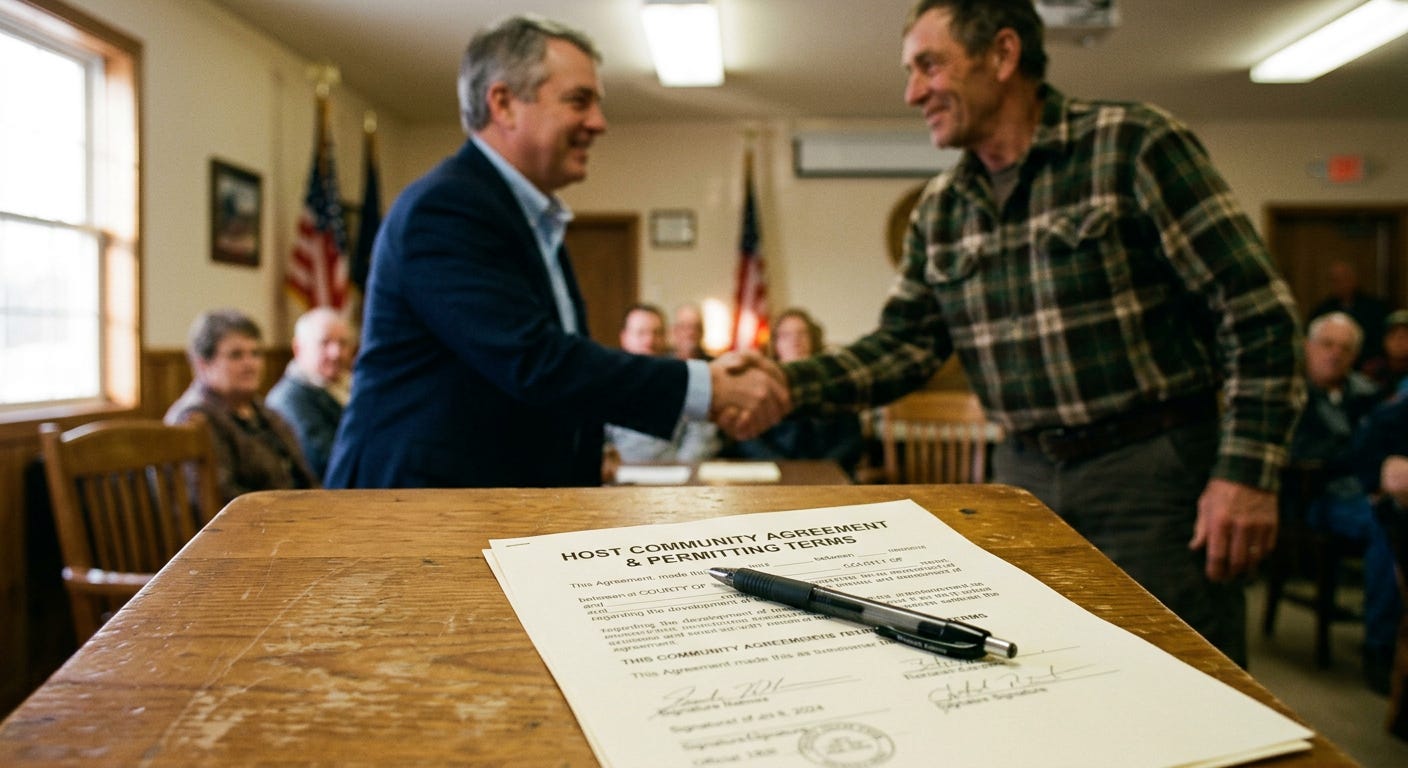
For years, renewable energy and storage developers facing local skepticism had a familiar playbook: sponsor the Little League team, offer a discretionary community donation, and gesture toward future “economic development.”
That kind of goodwill once helped developers signal that they were listening. But as projects have grown larger, more technical, and more permanent, communities have become less willing to treat informal gestures as a substitute for enforceable commitments.
In 2026, host communities are increasingly rejecting that playbook. They are not asking for goodwill alone; they are asking for enforceable legal contracts.
That shift matters far beyond one Michigan county. As renewable energy and battery storage projects move deeper into rural America, the fight is no longer only about whether communities support clean infrastructure. It is about whether they trust developers enough to let projects become part of the local landscape for decades.
Huron County shows what that demand for trust looks like when it reaches the ballot box.
