

A Community Benefits Check Is Not the Same as Trust
A benefit fund can help a community, but it cannot prove the place can carry the load.

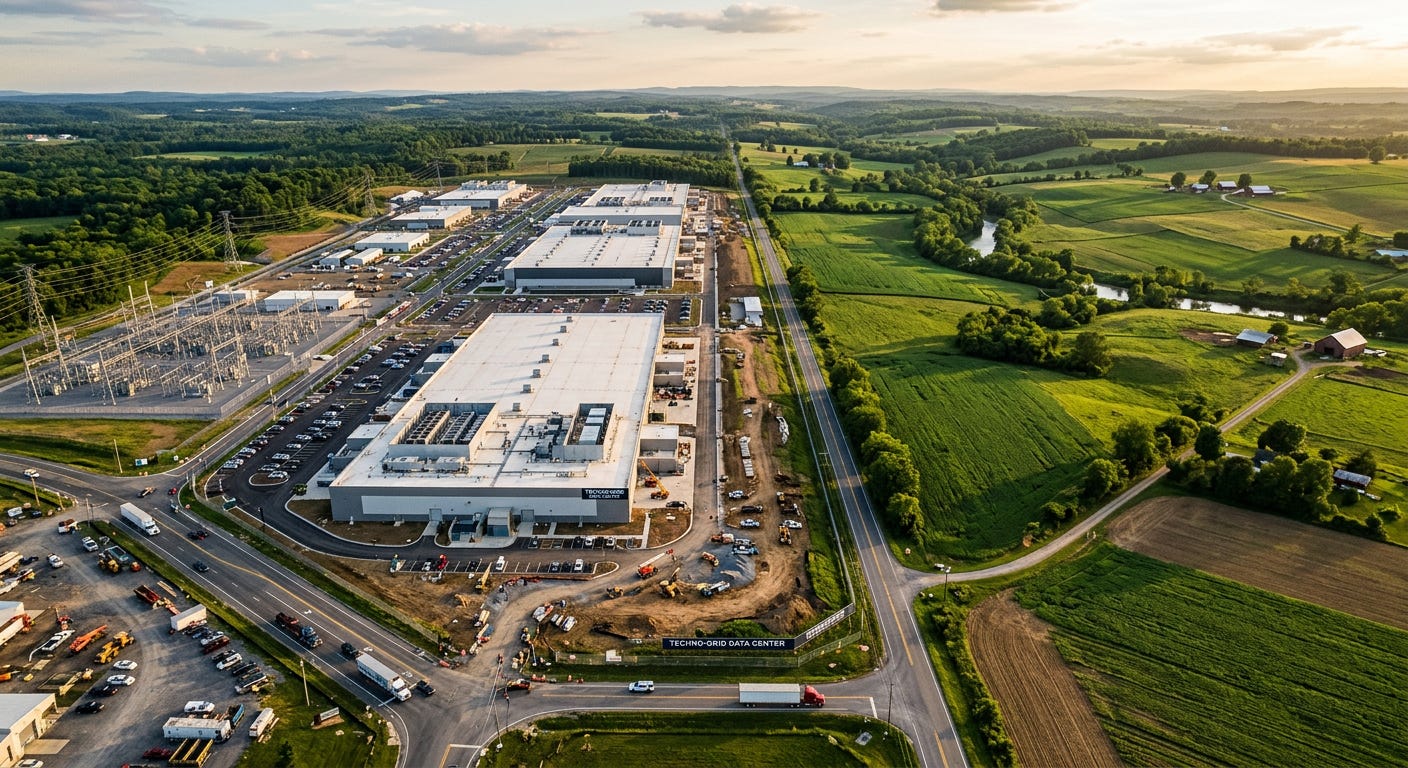
There is a familiar rhythm to big infrastructure fights.
A developer announces a project. Neighbors get worried. The public meetings get tense. Then, sooner or later, someone starts talking about community benefits.
Maybe it is money for parks. Maybe it is a STEM grant, a local hiring promise, road improvements, or a community fund. These things can be useful. I am not against them. But I do think they often arrive at the wrong moment and try to answer the wrong question.
Because when residents push back on a major project, they are not always saying, “What are you going to give us?” Often, they are asking something much more basic: “Can this place actually handle what you are proposing?”
That is what makes the case in Plumpton, Victoria, worth paying attention to. Outside Melbourne, Syncline Energy has proposed a very large data center campus on roughly 350 hectares. Reporting describes a planned maximum capacity of 2.4 gigawatts, with four data center buildings taking up about 140 hectares. More than 3,600 people have signed a petition calling for careful assessment before the project moves ahead.
The concern is not just one building, one road, or one noise study. It is the combined effect of everything that comes with a project like this: power demand, substations, transmission lines, cooling systems, construction traffic, and the slow change in what a place feels like.
